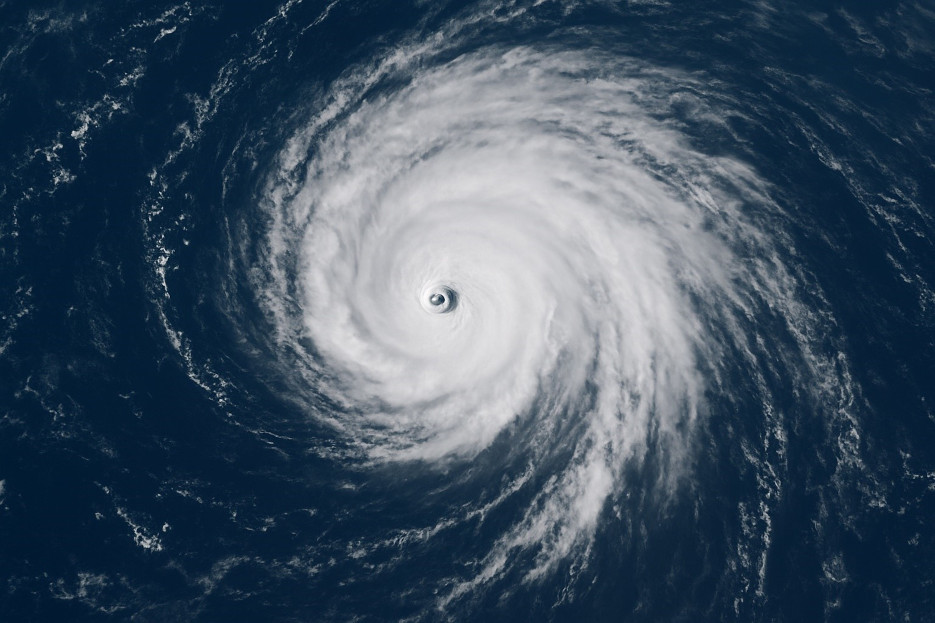
I just read the Google DeepMind’s Weather Lab AI “nailed its first major storm forecast” by exceeding traditional models at tracking Hurricane Erin, particularly in the critical first 3 days of prediction. That’s a major leap for AI in weather forecasting. (Gizmodo)
Over the past year, AI has gone from experimental enthusiast to legitimate meteorological contender. Models like GraphCast are delivering 10-day global forecasts in under a minute with impressive accuracy (Google DeepMind). GenCast, meanwhile, can simulate more than 50 weather scenarios up to 15 days out, outperforming even Europe’s top ECMWF model nearly every time (New York Post, Business Insider). Now, Google’s Weather Lab isn’t just theoretical, it’s being tested live, even beating official forecasts from the NHC and other physics-based systems in early track and intensity accuracy.
This is a great development for our Hurricane Hunter Sats that will bring additional data and knowledge that can be easy to incorporate into AI models that will further improve their foresting capabilities.
What’s next?
- Broader real-world integration. With NOAA’s National Hurricane Center now partnering with Google to evaluate and vet AI forecasts in real time, AI could soon become a reliable partner, not just a novelty (Technology Partnerships Office).
- Longer, smarter ensemble forecasts. Expect expanded use of models like GenCast and Weather Lab that simulate dozens of future scenarios to help communities prepare for possible extremes, not just the most likely outcome (The Verge).
- Complement, not supplant. While AI is improving in speed and accuracy, traditional physics-based models remain essential, especially for forecast resolution and for handling unprecedented weather events that were not learned by AI because of not enough data (The Verge).
- Tackling extreme outliers. AI still underpredicts and cannot be relied upon totally especially for extreme events, record-breaking temperature and wind events when compared head-to-head with established models. That’s a key hurdle as our climate becomes more volatile.
In short: AI is quickly becoming a force in weather forecasting: faster, often more accurate, and bringing potential. The next frontier? Proving its reliability across all conditions, especially the rare and destructive ones we most need to foresee. We will be there to support this development with Hurricane Hunter Satellites.
Related Reading
Ilya Schiller, “The Evolution and Future of AI in Weather Forecasting”, TWA Blog, January 16, 2025 [Post]
Drew LePage, “The Hurricane Hunter Satellites”, Drew Ex Machina, May 15, 2022 [Post]